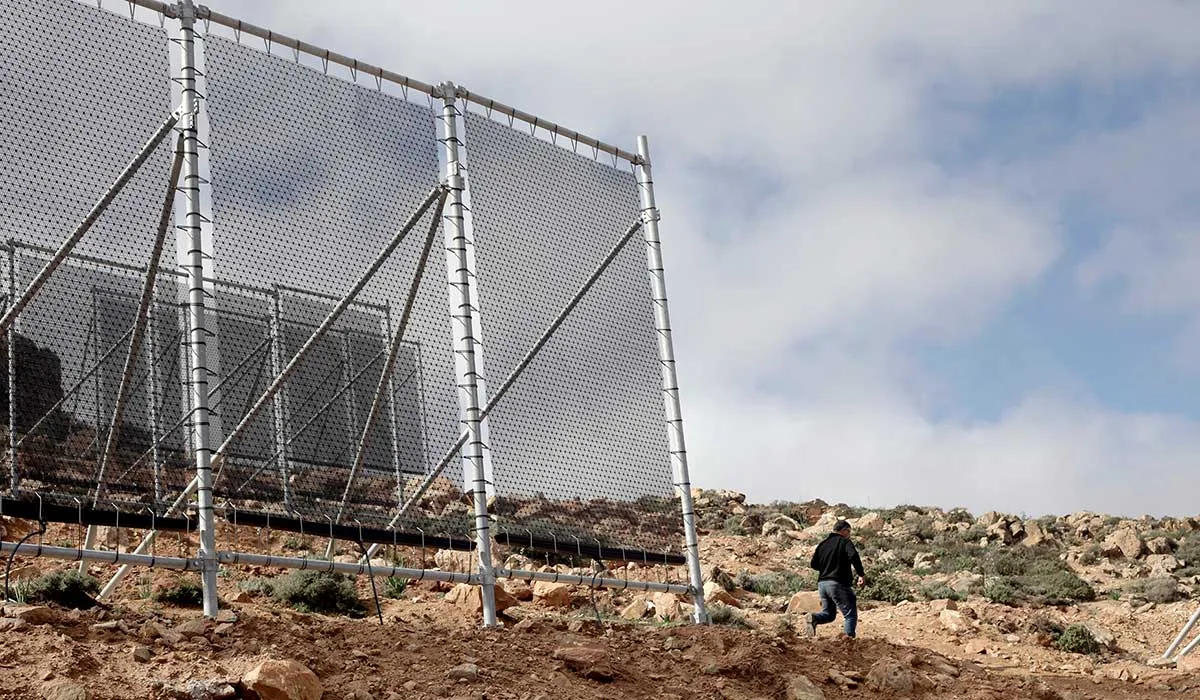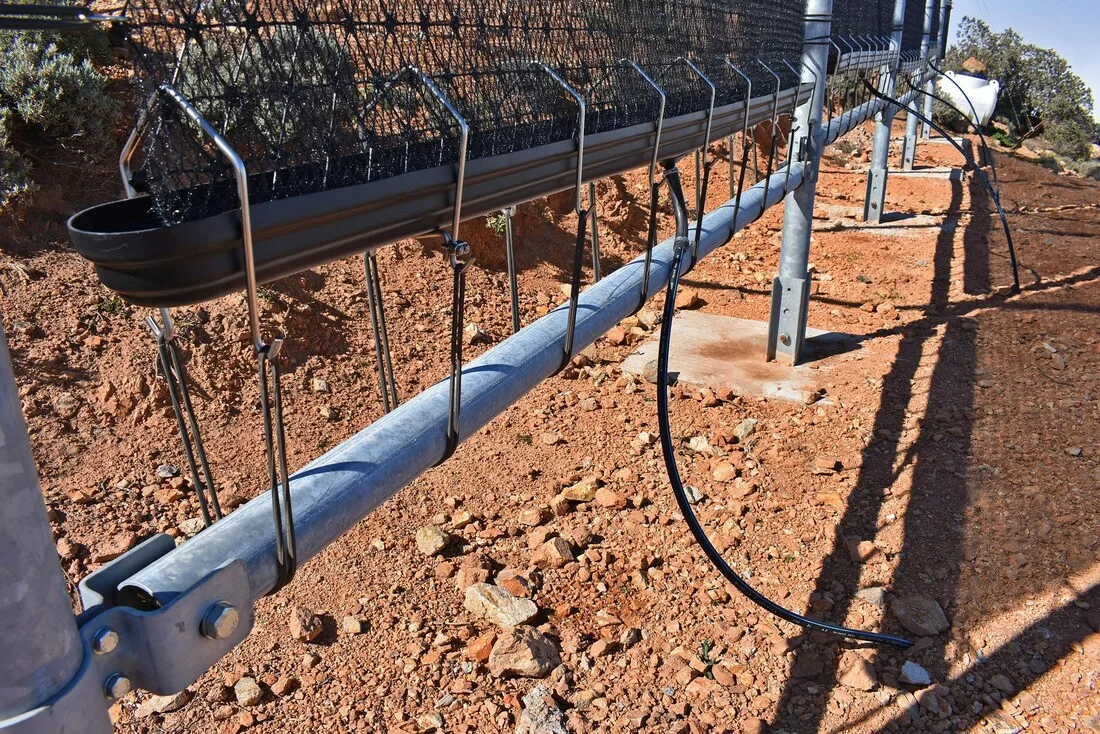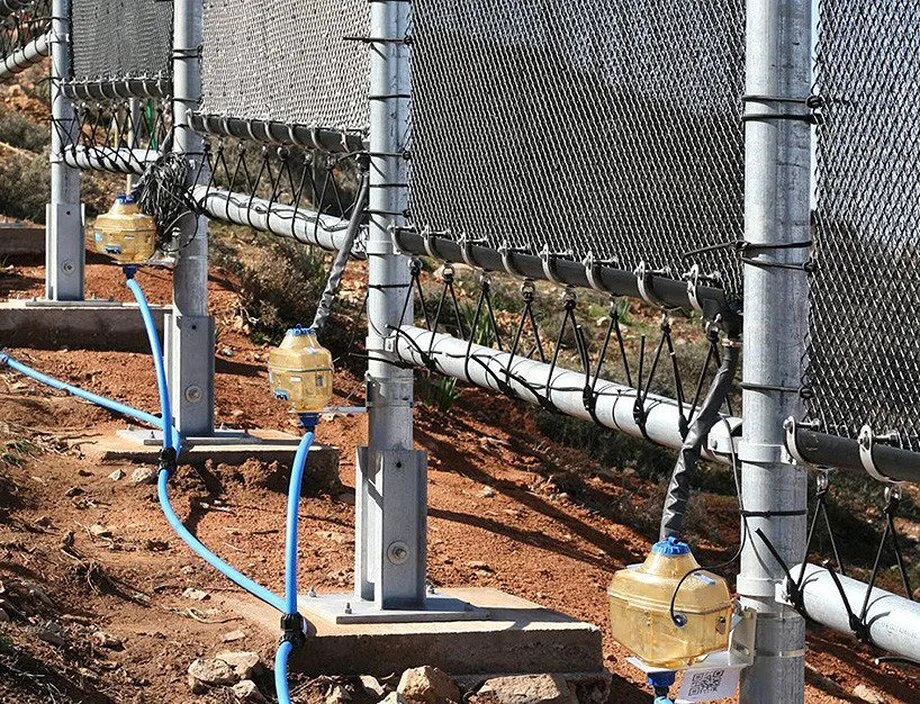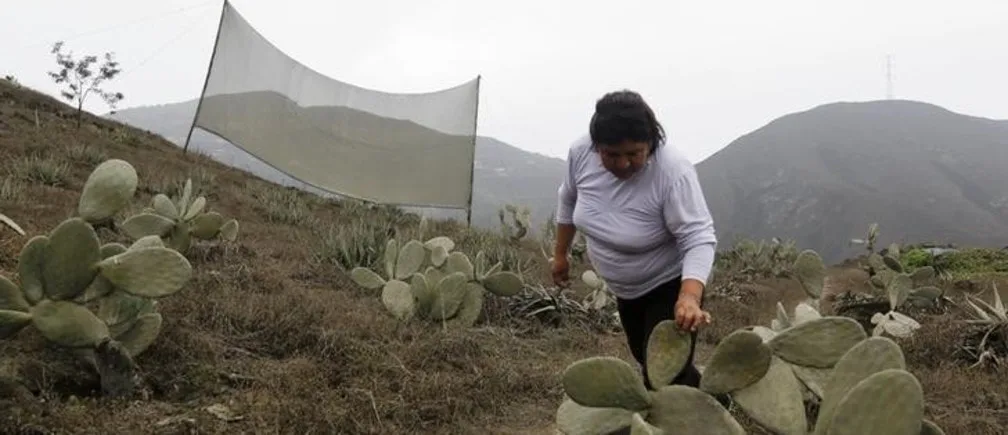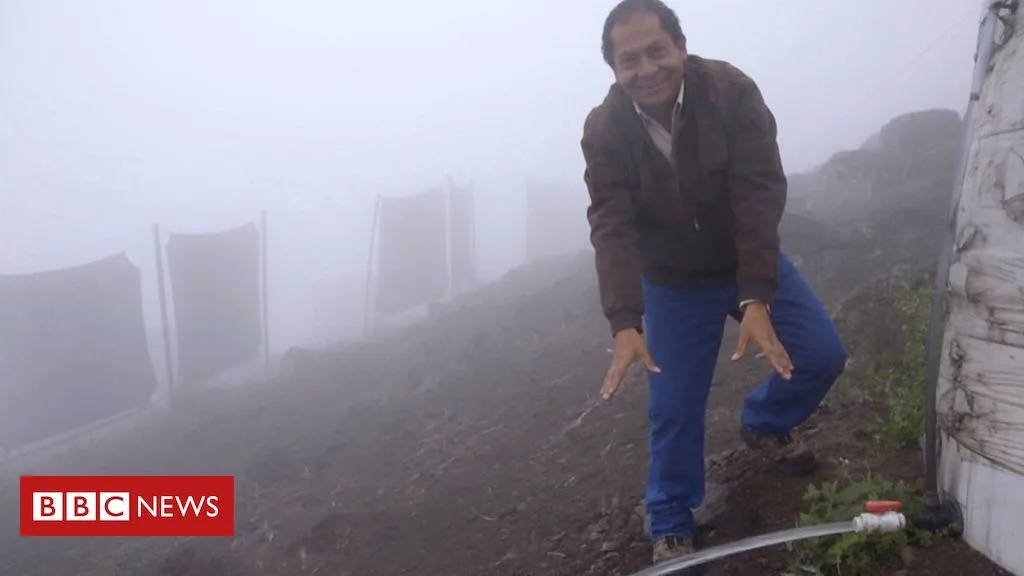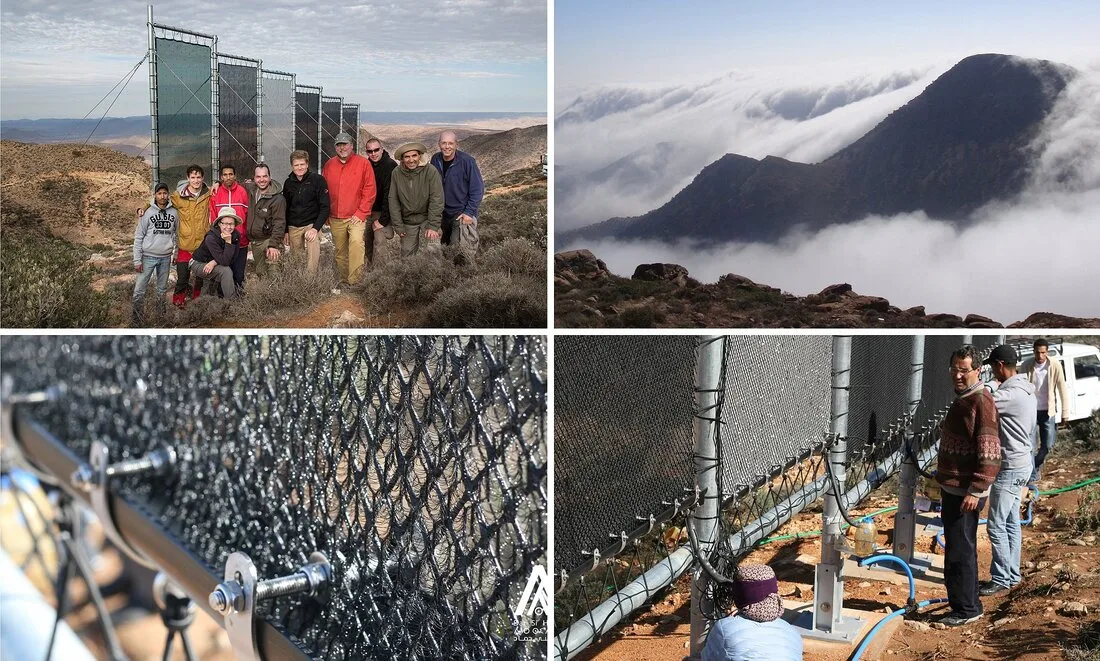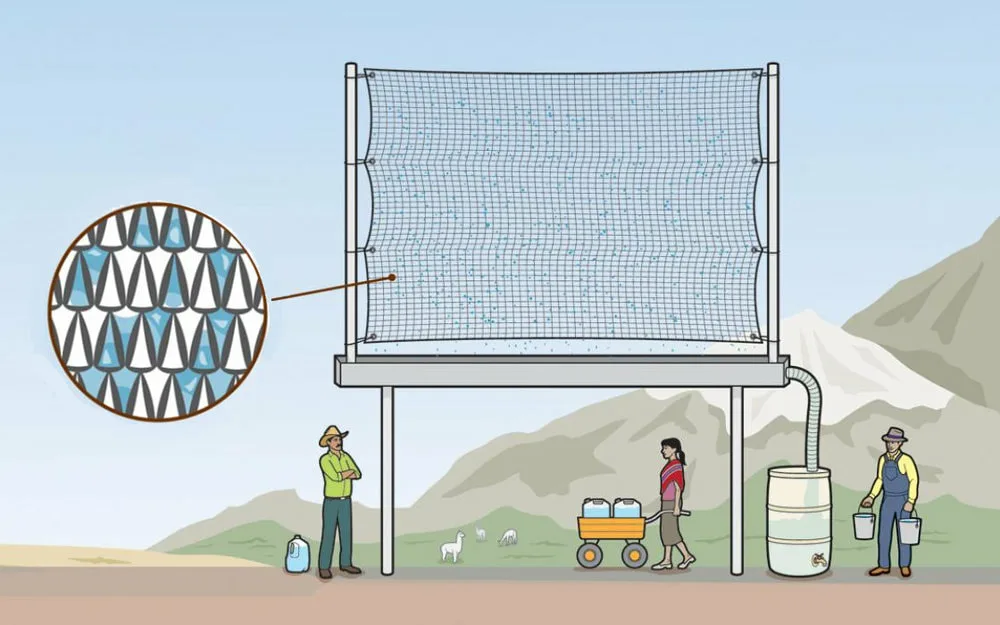
They are known as water guardians. Women in Southwest Morocco’s rural communities begin their trek as early as 4 a.m. and spend an average of 3.5 hours a day making multiple trips to collect water for their families. In the summer, it takes them more than four hours. Sometimes they return empty-handed because the wells are dry or their buckets broken. When available, they offer the water first to their children, elders and then the animals, often leaving the women thirsty at the end of arduous days. For girls it often means that they could not continue school, in order to help their mothers with the daily water gathering. Harvesting water from fog is an ancient and relatively straightforward technique that requires few materials and no electricity. The process consists of hanging specialized plastic nets between two tall poles to trap the tiny water droplets found in fog. When the wind pushes fog through the vertical mesh, the droplets are trapped, then drip into a gutter at the base of the unit. This pure water is collected and distributed via plastic pipes that run down the mountain into homes in nearby villages. The 870 square meters of nets installed by Dar Si Hmad collect an average of 22 liters of water per square meter every day. Credit: UN Climate Change