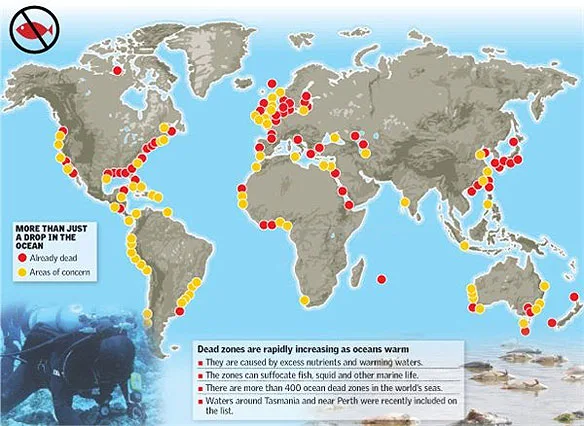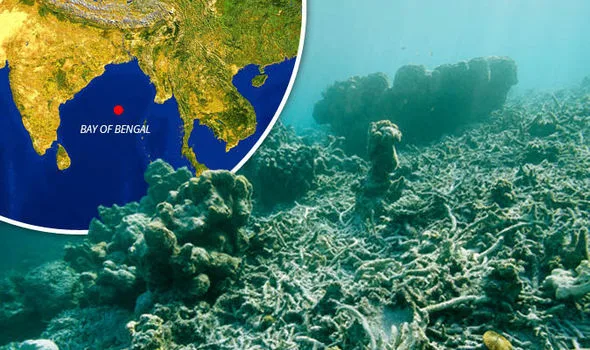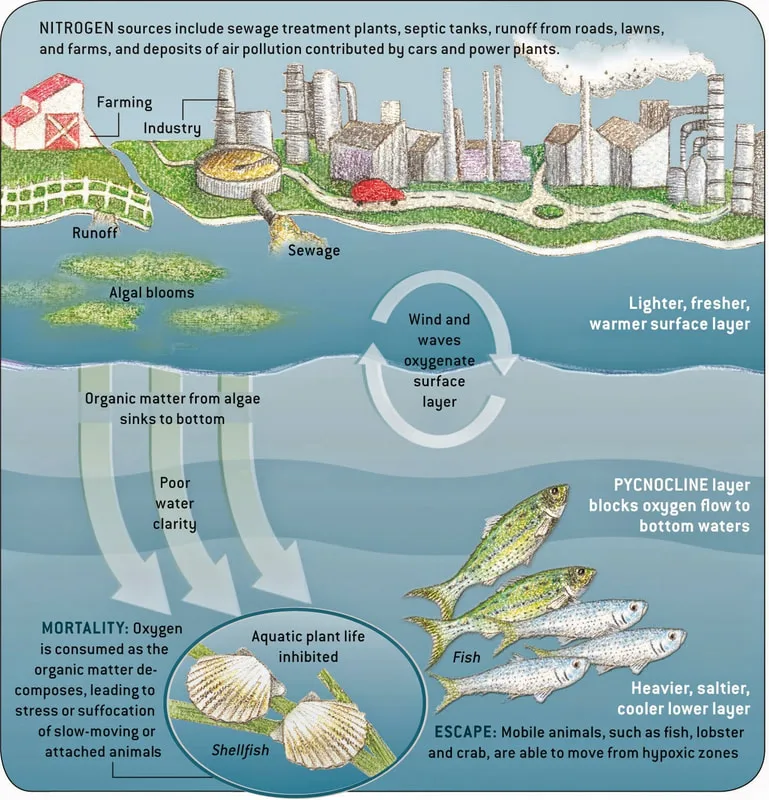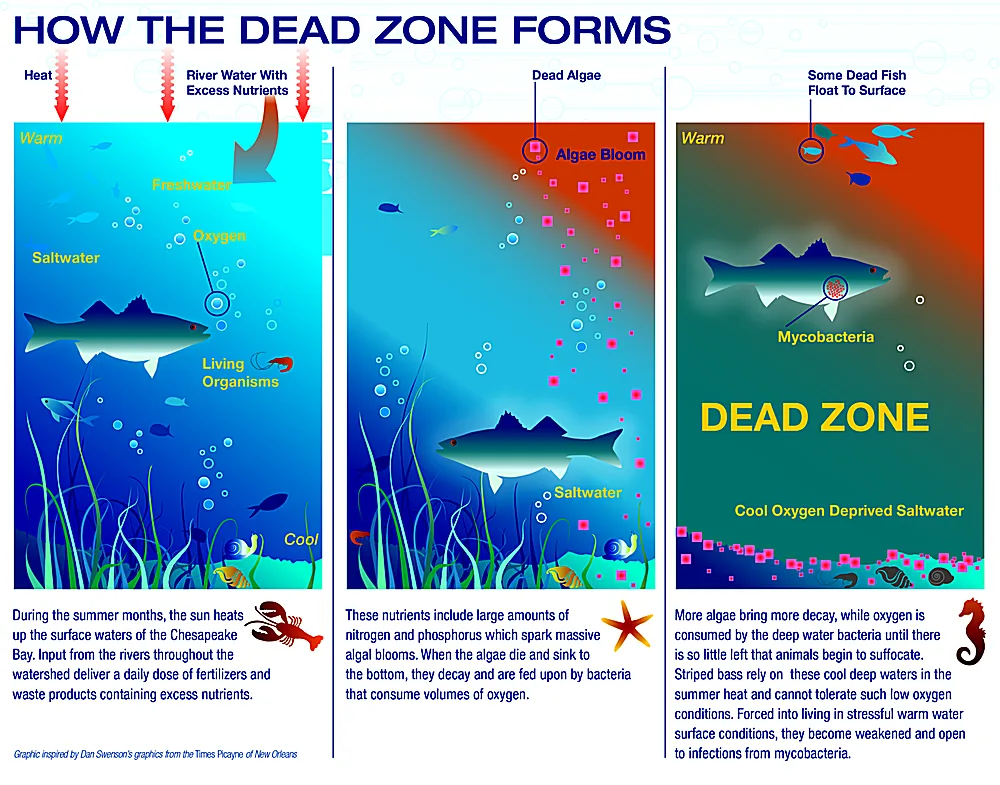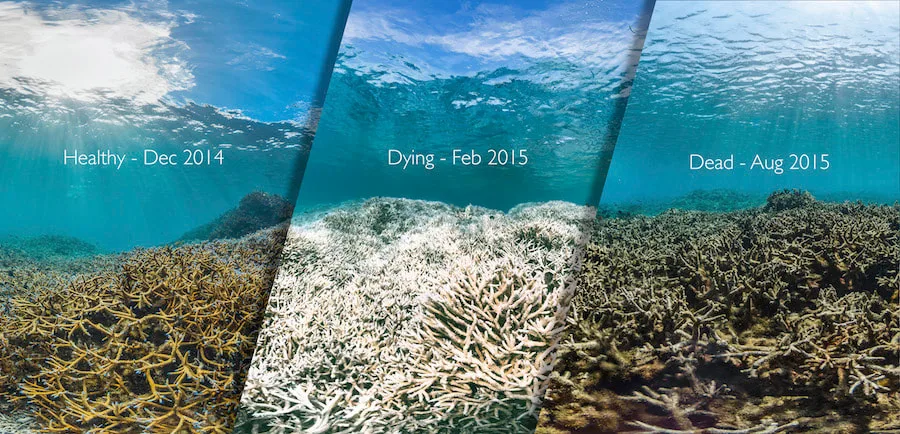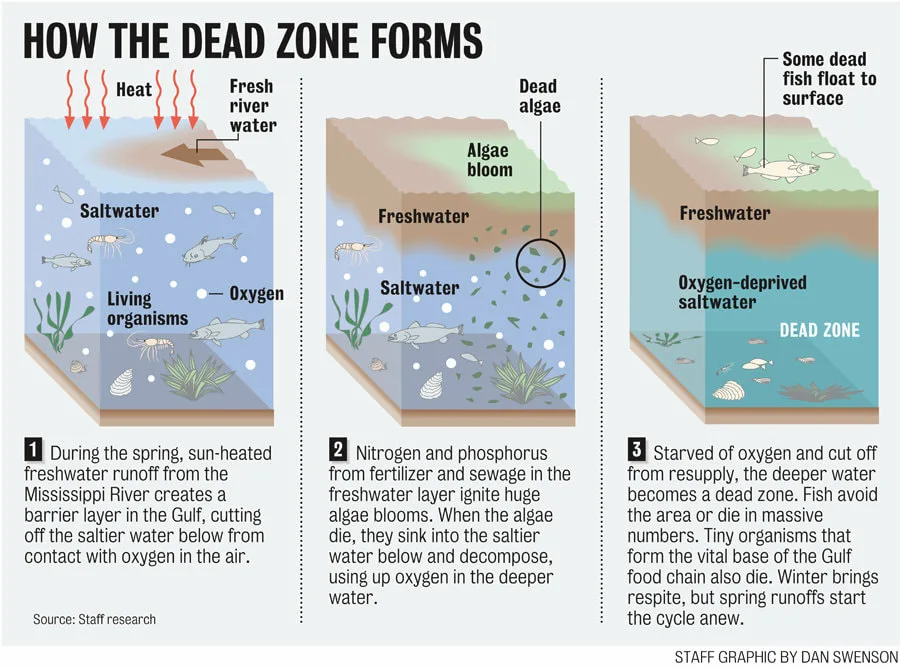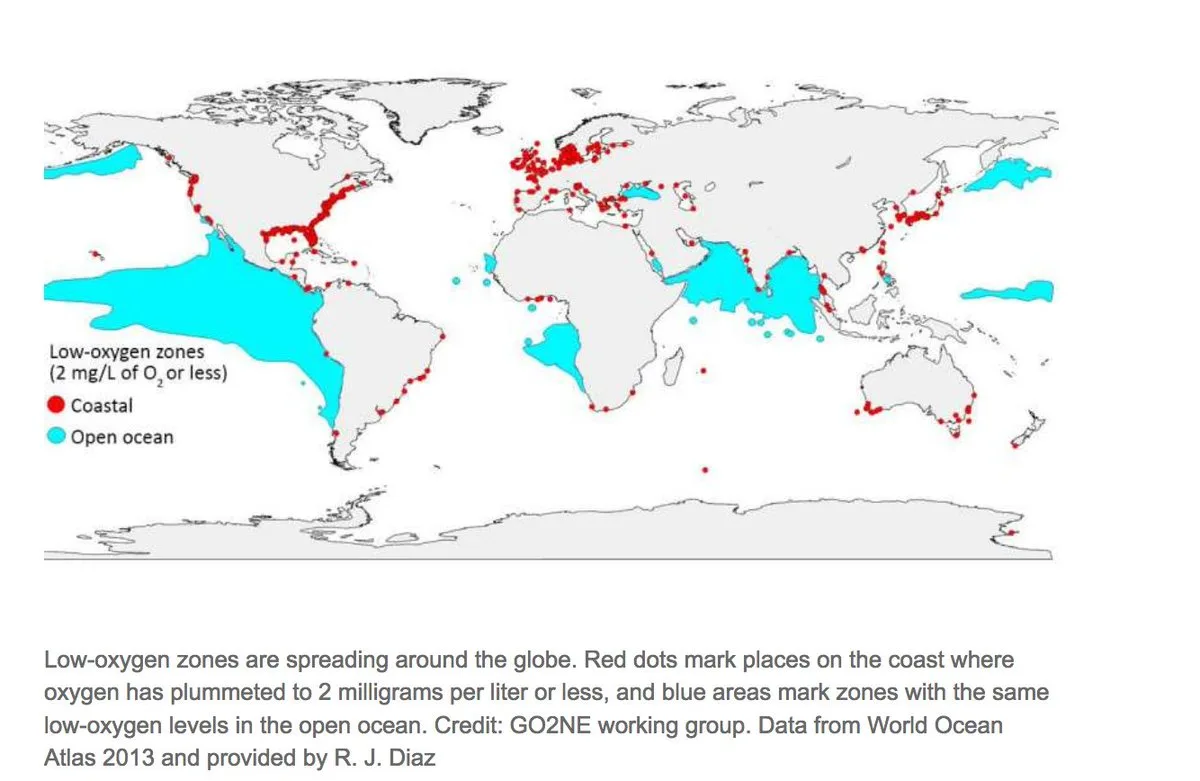
Ocean regions with low oxygen levels have a huge impact on aquatic organisms and can even destroy entire ecosystems. Areas of extremely low oxygen, known as oxygen minimum zones or “dead zones”, are estimated to constitute 10% and rising of the world’s ocean. This expansion has been attributed to a warming climate, which increases water temperature, changes ocean circulation, and decreases the solubility of oxygen in sea water. At the same time fertiliser and pesticide run-off from farming and other human activities leads to rising levels of nutrients such as nitrogen and phosphorous reaching the sea. To prevent the possibility of a 1,000-year (or longer) recovery period from a dead zone seafloor, we need to be much more aware of how the various environmental aspects are connected. An understanding of how de-oxygenation has affected the ocean in the past and how our actions are affecting the ocean in the present is critical to either preventing a recurrence or at least minimising effects of what we have already done. Credit: THE YEARS PROJECT