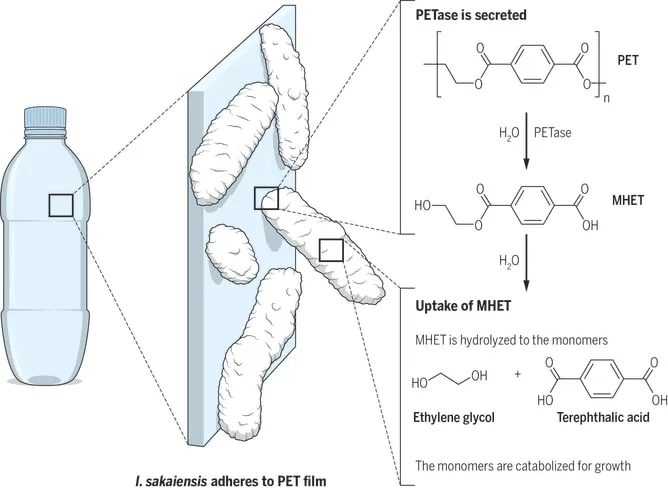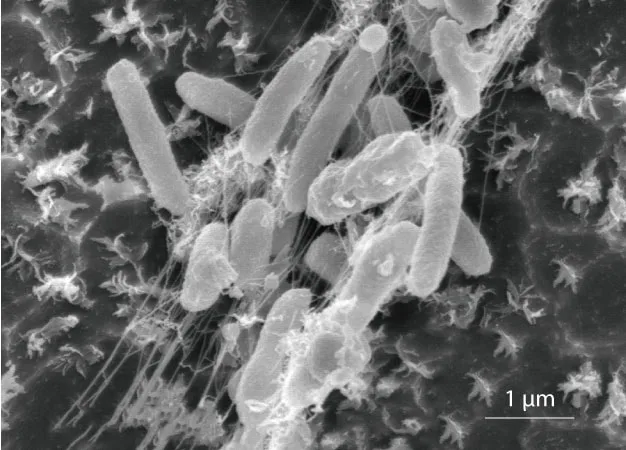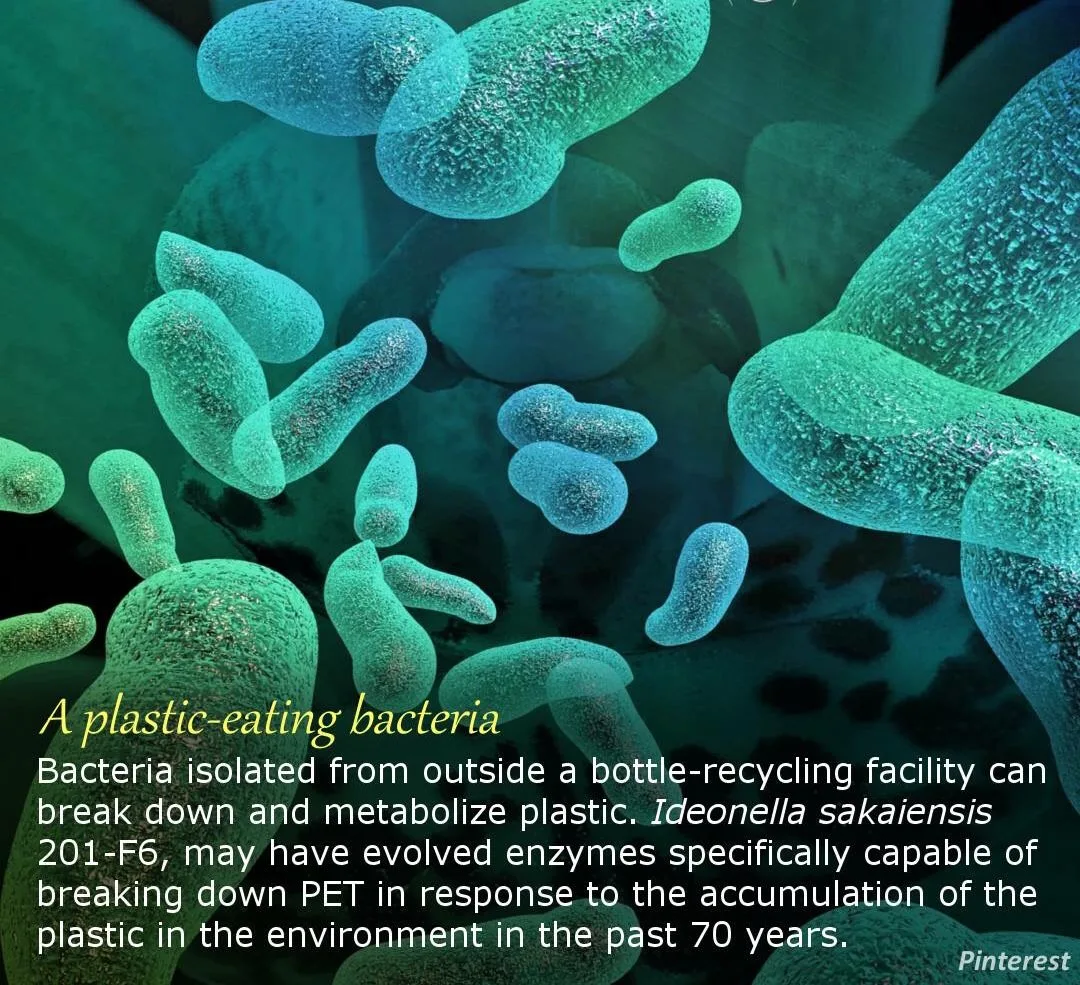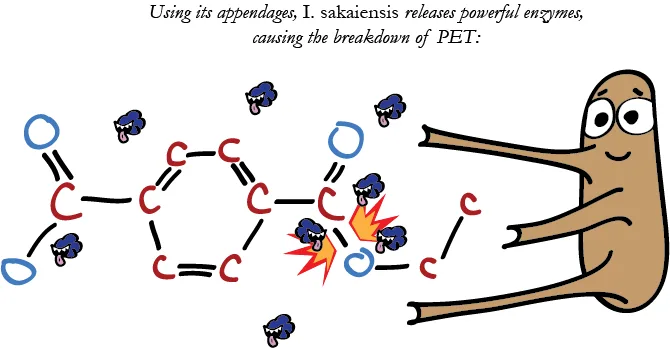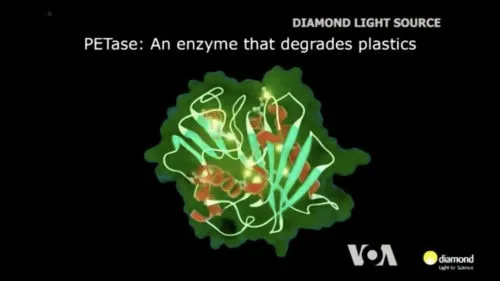
Scientists recently discovered a strain of bacteria that can literally eat the plastic used to make bottles, and have now improved it to make it work faster. The effects are modest – it’s not a complete solution to plastic pollution – but it does show how bacteria could help create more environmentally friendly recycling. In 2016, scientists from Japan tested different bacteria from a bottle recycling plant and found that Ideonella sakaiensis 201-F6 could digest the plastic used to make single-use drinks bottles, polyethylene terephthalate (PET). It works by secreting an enzyme (a type of protein that can speed up chemical reactions) known as PETase. This splits certain chemical bonds (esters) in PET, leaving smaller molecules that the bacteria can absorb, using the carbon in them as a food source. The improvements to the PETase activity were not dramatic, and we are nowhere near a solution to our plastic crisis. But this research helps us understand how this promising enzyme breaks down PET and hints at how we could make it work faster by manipulating its active parts. Credit: attn: