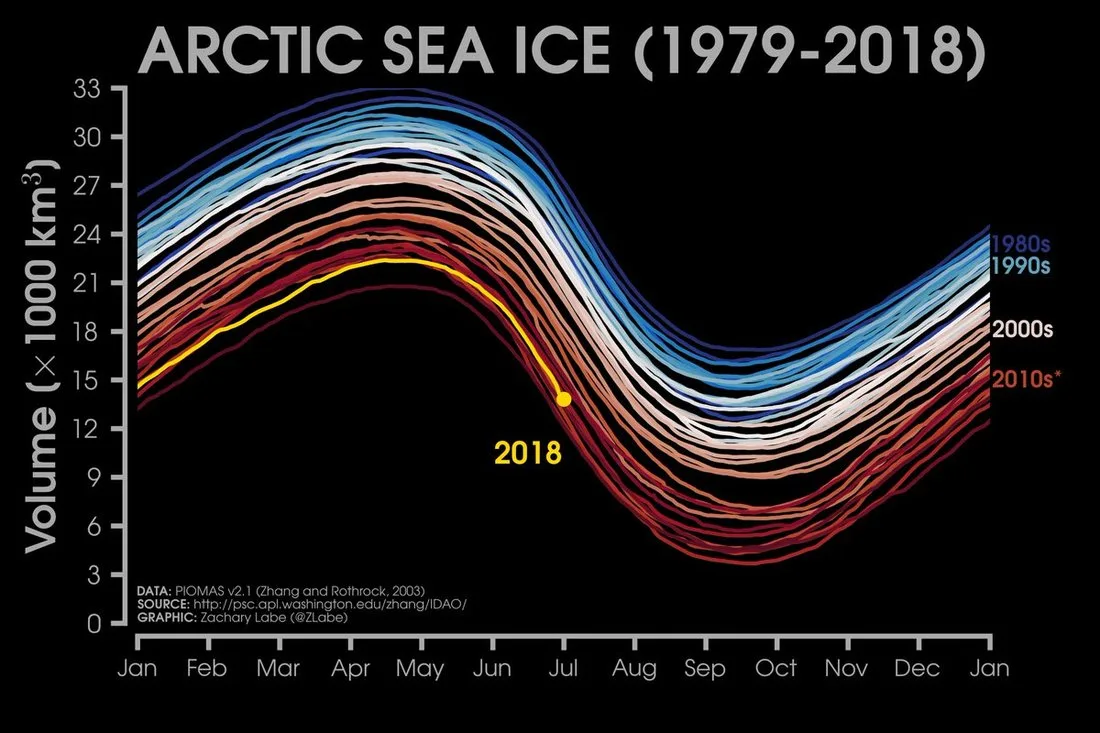
The oldest and thickest sea ice in the Arctic has started to break up, opening waters north of Greenland that are normally frozen, even in summer. This phenomenon – which has never been recorded before – has occurred twice this year due to warm winds and a climate-change driven heatwave in the northern hemisphere. The latest readings by the Norwegian Ice Service show that Arctic ice cover in the Svalbard area this week is 40% below the average for this time of year since 1981. In the past month, at least 14 days in the past month have hit record lows in this region. Although thinner ice elsewhere in the Arctic means this is unlikely to be a record low year overall, they are in line with predictions that there will be no summer ice in the Arctic Ocean at some point between 2030 and 2050.