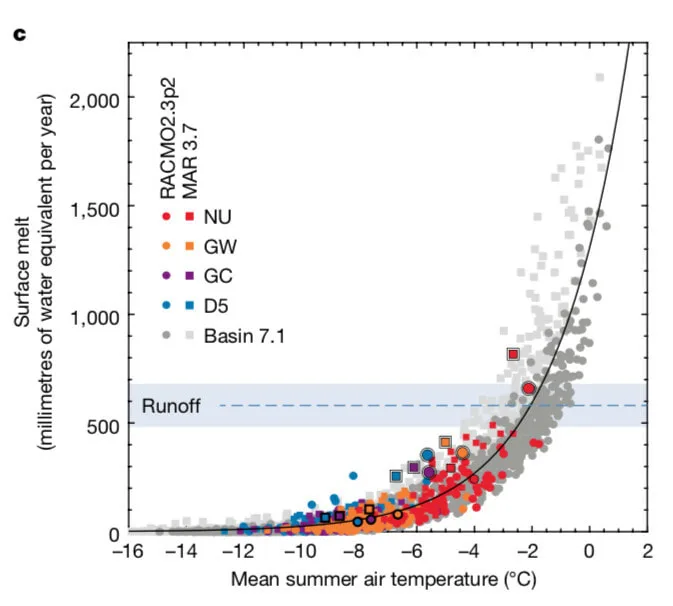
A paper earlier this year reported that Western Greenland is melting at its fastest rate in 400 years. Another study last year found that one section of Greenland suddenly started melting 80 percent faster. There are several mechanisms at work here. Greenland gains some ice in the winter and loses some in the summer, but as the planet has warmed, the latter has outpaced the former. The ice in Greenland is also getting darker, as soot carried through the air and microorganisms like algae coat the ice. This allows the ice to absorb more solar energy, thereby heating up and melting faster, which in turn allows the microorganisms to spread further. The key uncertainty for sea level rise is what the world will do to limit global warming, but on our current trajectory, we can expect upward of FIVE feet of sea level rise by the end of the century. Credit: TIME